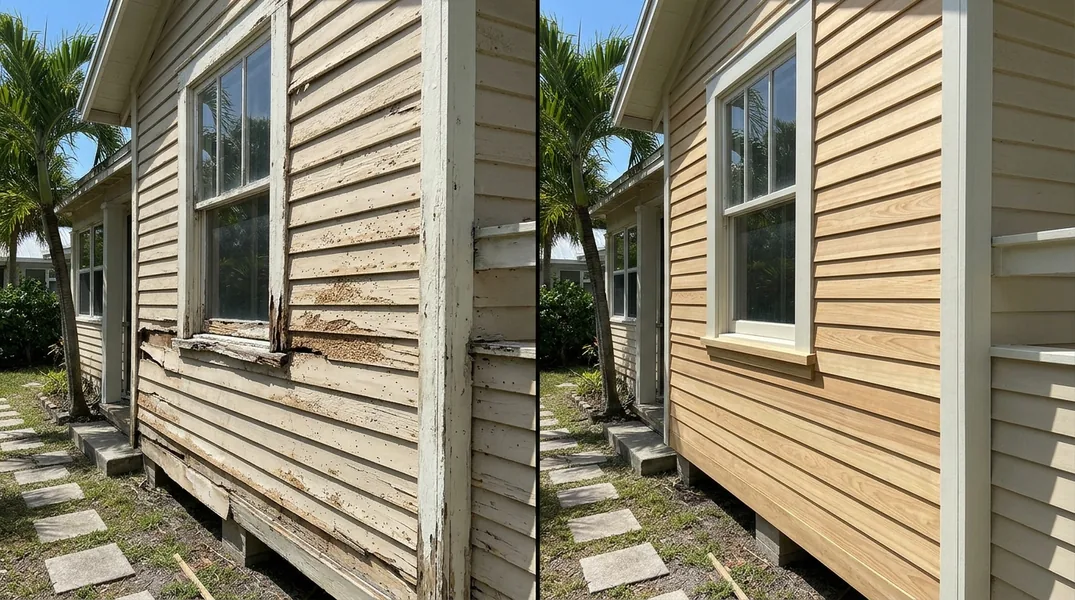
Why Fort Lauderdale's Climate Is a Perfect Storm for Wood Damage
Fort Lauderdale homeowners face a unique challenge that inland residents simply don't encounter at the same scale. Our warm, humid subtropical climate is essentially an open invitation to termites and wood-destroying fungi. Temperatures rarely dip below freezing, which means termite colonies remain active year-round. Unlike northern states where winter provides a natural pest control window, South Florida offers termites a continuous feeding season.
The humidity levels in our region compound the problem significantly. With average humidity often exceeding 70 percent, wood stays moist longer after rain, creating the exact conditions that wood rot fungi need to thrive. Drywood termites, which are particularly common in South Florida, don't even need soil contact to survive. They extract moisture from the wood itself, making them especially dangerous for homes built with wooden structural components. When you combine consistent warmth, high humidity, and abundant wooden structures, you get a recipe for accelerated wood deterioration that can cost thousands in repairs if left unchecked.
Understanding Drywood Termites and South Florida's Infestation Problem
Drywood termites are the primary termite threat in South Florida, and they operate differently than their subterranean cousins. These insects don't build mud tubes or require ground contact. Instead, they colonize wood directly, chewing through structural beams, framing, and even furniture from the inside out. A single drywood termite colony can contain hundreds of thousands of individuals, all working to hollow out your home's wooden framework. What makes drywood termites particularly insidious is that homeowners often don't notice an infestation until significant structural damage has already occurred.
The reason drywood termites thrive so well in Hollywood, Coral Springs, and surrounding areas is that they're easily transported in wooden furniture, shipping pallets, and construction materials. Once they establish a colony in your home, they reproduce rapidly in our year-round warm climate. Unlike termites in cooler regions that slow down or go dormant during winter, drywood termites in South Florida maintain constant activity. This means the damage they cause accumulates faster and more severely, which is why early detection and professional intervention are so critical for protecting your investment.
Signs of Termite Damage: What Fort Lauderdale Homeowners Should Look For
Recognizing signs of termite damage early can save you tens of thousands of dollars in structural repairs. One of the most common indicators is the presence of frass, which is termite droppings that look like tiny sawdust pellets. You might notice small piles of this material near baseboards, in attics, or under wooden beams. Another telltale sign is hollow-sounding wood. If you tap on wooden beams, door frames, or window sills and they sound papery or hollow, termites have likely been feeding inside. Damaged wood often feels soft or spongy when pressed with a screwdriver or awl.
Additional warning signs include visible mud tubes (more common with subterranean termites), blistered paint on wood surfaces, or wood that appears buckled or warped. You might also notice small holes or exit points in wood where termites have chewed through. Some homeowners report hearing faint clicking or rustling sounds coming from walls, which is actually the sound of termite soldiers banging their heads against wood as an alarm signal. If you spot any of these indicators in your Pembroke Pines home or property, don't wait. Contact Fort Lauderdale Carpentry at (754) 354-7735 to schedule a professional inspection and get a free estimate for any necessary repairs.
Wood Rot and Moisture: The Silent Destroyer in Humid Climates
While termites grab the headlines, wood rot is often the more insidious threat in humid climates like ours. Wood rot, also called dry rot when it occurs in wood with lower moisture content, results from fungal decay. Unlike termites, which are living creatures that can be eliminated with pest control treatments, wood rot is a chemical breakdown process. Once fungi establish themselves in wood, they decompose the cellulose and lignin that give wood its structural strength. This process accelerates dramatically in South Florida's humid environment.
The danger of wood rot is that it can progress silently for months or even years before becoming visible. By the time you notice soft spots, discoloration, or a musty smell, significant structural compromise may have already occurred. This is why Wood Rot & Dry Rot Repair requires immediate professional attention. Affected wood must be removed and replaced with new, treated lumber to restore structural integrity. The longer you wait, the more extensive the damage becomes and the higher your repair costs will climb. Moisture control and regular inspections are your best defense against wood rot in our climate.
Professional Termite Damage Repair and Structural Restoration
Termite Damage Repair isn't something homeowners should attempt on their own. When termites have compromised structural elements like floor joists, beams, or load-bearing walls, the repairs require specialized knowledge and building code compliance. Fort Lauderdale Carpentry has extensive experience removing damaged wood and replacing it with properly installed, pressure-treated lumber that resists future pest and rot damage. Depending on the severity of the infestation, repairs might involve straightforward joist replacement or more complex work like Floor Joist & Subfloor Repair.
In cases where termites have damaged structural supports or load-bearing walls, you may need Beam Replacement & Load-Bearing Wall Removal services to safely restore your home's integrity. These repairs are critical not just for your home's value, but for the safety of your family. A compromised beam or floor system can lead to sagging floors, cracked walls, or even partial structural failure. Professional contractors ensure that all repairs meet local building codes and that temporary support systems are properly installed during the work. This protects both your property and the workers performing the repairs.
Wood Rot and Dry Rot Repair Cost in Fort Lauderdale: What to Budget
The cost of wood rot and termite damage repair varies widely depending on the extent of the damage, the location of affected wood, and the type of repair needed. A small area of rot in a non-structural element might cost a few hundred dollars, while extensive termite damage affecting multiple joists or beams could run several thousand. This is why getting a professional assessment is so important. Fort Lauderdale Carpentry provides transparent pricing based on a detailed inspection of your specific situation. We'll identify all damaged areas, explain what needs to be repaired, and give you an accurate estimate before any work begins.
Many homeowners are surprised to learn that addressing damage early actually saves money in the long run. A small area of rot caught early might cost $800 to $1,500 to repair, but if left untreated for two years, that same area could expand to require $5,000 or more in structural repairs. The same principle applies to termite damage. Early detection and treatment, followed by prompt repair of affected wood, is far more cost-effective than waiting until the damage becomes extensive. If you're concerned about potential termite or wood rot damage in your Fort Lauderdale home, call (754) 354-7735 today to schedule your inspection and receive a free estimate with no obligation.
Protecting Your Home: Prevention and Regular Maintenance
While you can't eliminate the warm, humid climate that makes South Florida attractive to termites and fungi, you can take proactive steps to protect your home. Regular inspections are the foundation of any prevention strategy. Have a professional inspect your property at least once per year, focusing on crawl spaces, attics, basements, and areas where wood contacts soil or concrete. Look for signs of moisture intrusion, which is the gateway to both termite infestation and wood rot. Ensure that gutters and downspouts direct water away from your foundation, and maintain proper grading so water doesn't pool near your home's base.
Ventilation and moisture control are equally important. Use exhaust fans in bathrooms and kitchens, ensure that your attic has adequate ventilation, and consider using a dehumidifier in particularly damp areas like crawl spaces. Treat any visible wood rot immediately rather than hoping it will go away on its own. Remove wood debris, fallen branches, and mulch piles from around your foundation, as these create highways for termites to reach your home. Finally, work with a trusted contractor like Fort Lauderdale Carpentry to establish a maintenance schedule that keeps your home in top condition. When problems do occur, prompt professional intervention will protect your investment and your family's safety.
Looking for a professional carpentry contractor in Fort Lauderdale? Fort Lauderdale Carpentry responds fast for all your carpentry needs.
Get a Free QuoteOur services: Wood Rot & Dry Rot Repair · Termite Damage Repair · Floor Joist & Subfloor Repair