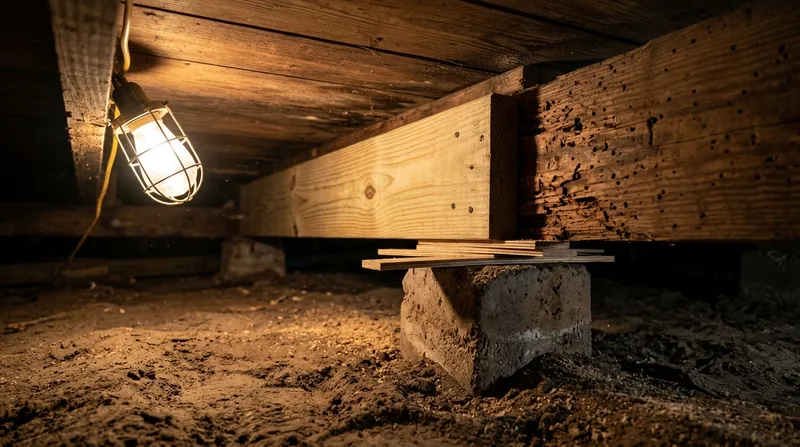




Floor Joist & Subfloor Repair in Fort Lauderdale addresses a common structural problem in the city's oldest residential stock: soft, bouncy, or sloping floors caused by termite damage, wood rot, or water intrusion from plumbing leaks and storm surge. Fort Lauderdale's pre-1950 cottages in Sailboat Bend, Rio Vista, and Colee Hammock sit on raised wood frames that face constant moisture from the subtropical climate, salt air off the Atlantic and Intracoastal, and the heavy summer downpours that drench South Florida. When floor joists and subfloor sections fail, the floor itself becomes unsafe and finishes crack or separate. We sister compromised joists, replace damaged subfloor, and level the floor before new finishes go down, restoring both safety and usability without unnecessary replacement of sound wood.
Why Floor Joist & Subfloor Repair Matters in Fort Lauderdale's Older Homes
Termites and wood rot are the two dominant threats to floor framing in Fort Lauderdale. Drywood termites, Formosan termites, and Asian subterranean termites work year-round in the warm, humid climate, hollowing joists from inside. Plumbing leaks under slab or in crawl spaces, combined with poor drainage and storm-driven water intrusion, soak subfloor and rim joists, triggering dry rot that weakens the wood over months or years. A sagging or bouncy floor is not just uncomfortable; it signals structural compromise that worsens over time and raises the cost of repair. Early intervention through joist sistering or selective subfloor replacement stops the damage, levels the floor, and preserves the structural integrity of the home.
- Termite damage hollows joists silently, leaving only a thin shell that fails under normal floor loading.
- Dry rot from plumbing leaks or storm water softens wood fiber, reducing bearing capacity and allowing the floor to sag or deflect.
- A bouncy or sloping floor indicates active joist failure and should be inspected and repaired promptly to prevent further settlement or cracking of walls and finishes.
- Sistering or partial replacement of joists is often sufficient to restore the floor without gutting the entire structure.
Addressing joist and subfloor problems early protects your home's resale value and prevents costly secondary damage to walls, doors, and finishes.
Key info: Fort Lauderdale homes built before 1960 are most vulnerable. Raised cottages in Wilton Manors, Victoria Park, and Middle River Terrace commonly show termite or rot damage in floor framing.
For more details on rot and termite damage assessment, see our wood rot and dry rot repair page and termite damage repair service.
How We Repair Floor Joists & Subfloor in Fort Lauderdale
Our process begins with a thorough inspection of the damaged area, including probing for hidden rot or termite galleries and assessing the extent of joist or subfloor compromise. We determine whether the wood can be saved through sistering (reinforcing a damaged joist with a new member bolted alongside) or whether selective replacement of subfloor sections or joists is necessary. Once we remove damaged wood, we rebuild the framing with pressure-treated lumber or solid stock, install new subfloor panels, and level the floor before finishes are reinstalled. The goal is always to use repair over replacement where the structural wood justifies it, and to restore the floor to its original plane so that doors swing freely and flooring sits flat.
- We probe and inspect the joist cavity, identifying the full extent of damage and checking for active termites or ongoing moisture.
- We determine whether sistering, partial replacement, or full joist replacement is the right repair for the damage pattern.
- We remove any damaged wood, clean the cavity, and allow the framing to dry if moisture is present.
- We install new joists or sister stock using bolts, nails, or structural fasteners appropriate to the load and connection type.
- We install new subfloor panels (typically 3/4-inch CDX plywood or pressure-treated boards) and level the floor surface.
- We verify the repair with a level and a straightedge before finishes go back down.
This methodical approach ensures that the repair is durable, meets the original floor loading, and restores usability without over-building or wasting material.
Real example: A 1930s cottage in Sailboat Bend had two termite-damaged floor joists in the bedroom. We sistered both joists with new pressure-treated 2x8 stock, bolted them to the existing framing, and replaced 40 square feet of subfloor. The floor was level again, no sagging, and the homeowner kept the original joist structure. Total time on site was two days. Compare that to full joist replacement, which would have required temporary support and twice the labor and cost.
Floor Joist & Subfloor Repair Methods
| Approach | Description | Best for |
|---|---|---|
| Joist Sistering | Install a new joist alongside a damaged one, bolted or nailed to share the load and reinforce the span. | Partial rot or termite damage on one side of a joist, or where the joist retains enough structural capacity to be reinforced rather than replaced. |
| Joist Replacement | Remove a severely damaged joist and install a new one of matching size and grade, with temporary support during installation. | Complete joist failure, extensive termite galleries, or dry rot affecting more than half the joist depth or width. |
| Subfloor Patching | Cut out and replace damaged subfloor sections, typically 4x8 or smaller areas, with new pressure-treated plywood or boards. | Rot or water damage limited to subfloor panels, or termite damage that does not extend into joists. |
| Floor Leveling & Shimming | Install shims, blocking, or new rim joist sections to correct sag and restore the floor to level before finishes are installed. | Sloping floors caused by settled or weak joists, or to fine-tune the plane after joist repair. |
| Rim Joist & Sill Plate Repair | Replace damaged rim joists and sill plates that sit on the foundation and are exposed to moisture and termites. | Water intrusion at the foundation line, termite damage at the rim, or rot in the sill plate supporting the floor frame. |
Floor Joist & Subfloor Repair Cost in Fort Lauderdale: What to Expect
Floor joist and subfloor repair in Fort Lauderdale typically starts at $1,800 for a straightforward sistering job on one or two joists with minor subfloor replacement. The final cost depends on several factors: the number and length of joists that need repair, the extent of subfloor damage, accessibility (crawl space, basement, or second-story), the presence of utilities or obstacles that must be worked around, and whether the floor requires significant leveling or shimming after repair. A large area with multiple joists or extensive subfloor replacement can run $4,000 to $7,000 or more. Getting 2 or 3 estimates from local carpenters is always smart, especially for structural work, so you understand the repair approach and can compare scope and pricing fairly.
We recommend a free, on-site estimate so we can assess the damage and give you a realistic number. Most jobs are quoted within 24 hours. Visit our pricing page for a more detailed breakdown, or call us at (754) 354-7735 to schedule.
Floor Joist & Subfloor Repair Near Me: What Fort Lauderdale Homeowners Should Know When Hiring a Carpenter
When you hire a carpenter for floor joist or subfloor repair in Fort Lauderdale, verify that the contractor is fully insured and carries liability and workers' compensation coverage. Ask for references from recent jobs and check them. Understand whether your repair requires a permit; structural work such as joist replacement or major subfloor work often does, and your local building department will have the final say on what needs approval. If your home is in a historic district or subject to HOA rules, confirm that any repair work complies with those guidelines before work begins. Most importantly, choose a carpenter who explains the damage clearly, proposes repair before replacement, and stands behind the work with a warranty.
- Ask the contractor to explain what damage was found, how it will be repaired, and why that approach is the right one for your home.
- Request a written estimate that breaks down labor, materials, and timeline so there are no surprises.
- Check whether a permit is needed by contacting the Fort Lauderdale Building Department or your local municipality; the contractor can advise, but the building department has final authority.
- Confirm that the contractor carries full insurance and will handle any required permits as part of the job.
- Get a warranty in writing, typically 1 to 2 years on workmanship, so you have recourse if the repair fails.
Taking time to hire the right carpenter saves money and headaches down the line. Contact us for a free, no-obligation estimate and to discuss your specific floor repair needs.
Floor Joist & Subfloor Repair in Fort Lauderdale: Pricing Guide
| Service | Price | Details |
|---|---|---|
| Single joist sistering with minor subfloor patch | Starting at $1,800 | Reinforcing one or two joists with sister stock and replacing up to 50 sq ft of subfloor in accessible location |
| Multiple joist repair or full subfloor section replacement | Starting at $3,500 | Three or more joists sistered or replaced, or 100+ sq ft subfloor work, includes floor leveling and shimming |
| Rim joist or sill plate replacement | Starting at $2,200 | Replacing damaged rim joist or sill plate at foundation line, critical for water intrusion and termite prevention |
| Large-scale joist and subfloor restoration | On estimate | Extensive termite or rot damage across multiple bays, or second-story floors requiring temporary support during repair |
| Travel and estimate | Free | No charge for on-site inspection and written quote within Fort Lauderdale and surrounding service areas |
Indicative pricing, the exact cost depends on square footage, finish, and site access. Free personalized estimate within 24h at (754) 354-7735.


