Why Your Door Won't Close Properly in Fort Lauderdale
If you've been struggling with a door that won't close properly in your Fort Lauderdale home, you're not alone. Sticking doors are one of the most common complaints we hear from homeowners across South Florida, and the causes are often more serious than a simple adjustment. While many people assume a sticking door is just a minor inconvenience, it can actually be a warning sign that something is happening inside your door frame or walls.
The tropical climate of Fort Lauderdale creates unique challenges for wood structures. High humidity levels, seasonal moisture fluctuations, and salt air all work together to affect the integrity of wooden doors and frames. Before you reach for sandpaper or a plane, it's important to understand what's really causing your door to stick. The solution depends entirely on the root cause, and misdiagnosing the problem could lead to wasted time and money.
Humidity and Swollen Doors: The Florida Factor
Sticking doors humidity is perhaps the most common culprit in Florida homes, and for good reason. Wood is hygroscopic, meaning it absorbs and releases moisture based on the surrounding air. In Fort Lauderdale, where humidity regularly exceeds 70 percent and can spike to 90 percent or higher during summer months, your wooden doors are constantly swelling and shrinking.
When humidity levels rise, wood absorbs moisture and expands. This expansion is most noticeable in solid wood doors and door frames, which swell perpendicular to the grain. Even a small amount of swelling, sometimes just a quarter inch, is enough to cause binding against the door frame. You might notice the problem gets worse on particularly humid days or during the summer months, then improves slightly during drier periods. This seasonal pattern is a strong indicator that humidity is your primary issue. While this type of swelling is reversible and typically harmless on its own, it can mask more serious underlying problems that develop over time.
Termite Damaged Door Frame: A Silent Destroyer
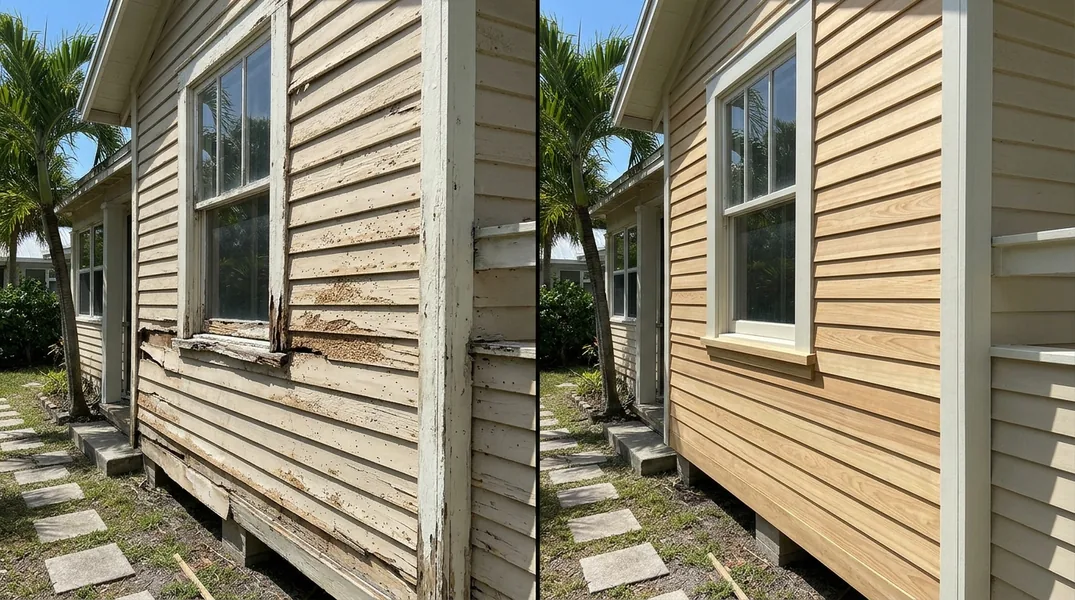
One of the most concerning reasons for a sticking door is Termite Damage Repair to the door frame itself. Termites are attracted to wood and are particularly active in warm, humid climates like ours. A termite damaged door frame might not show obvious signs of infestation at first glance, but the structural damage can be severe and progressive. As termites tunnel through the wood, they create hollow galleries that weaken the frame and cause it to warp, bow, or shift out of square.
When a door frame becomes infested, the frame may no longer be perfectly rectangular. Even slight distortion of the frame geometry will cause the door to bind against the top or sides as it swings. You might notice that the door sticks in one specific spot rather than dragging across the entire length. This localized binding, combined with other signs like mud tubes on exterior walls, hollow-sounding wood, or small holes in the frame, suggests termite activity. The problem with termites is that they continue to cause damage as long as they remain active. Addressing only the sticking door without treating the termite infestation means the frame will continue to deteriorate, and eventually the door may stop working entirely.
Wood Rot and Dry Rot: Structural Compromise
Wood Rot & Dry Rot Repair is another critical reason your door might be sticking. Unlike termites, rot develops when wood is exposed to excess moisture without adequate ventilation. Door frames that have poor drainage, missing caulking, or damaged weatherstripping are vulnerable to rot. Once rot begins, it spreads throughout the wood grain, causing it to soften, lose structural integrity, and eventually crumble.
A rotted door frame may appear to be swollen or warped, but the underlying cause is decay rather than simple moisture absorption. You might notice that the frame feels soft or spongy when you press on it, or that paint is peeling and the wood appears discolored or darkened. Rot weakens the frame so severely that it can no longer hold the door in proper alignment. Unlike humidity-related swelling, rot damage is permanent and will only worsen with time. If left untreated, a rotted frame may eventually fail completely, leaving your door unable to close or lock. This is why professional inspection is so important. What looks like a simple sticking door could be the first visible sign of rot that has been developing inside your frame for months or even years.
How to Diagnose the Real Problem
Determining whether your sticking door is caused by humidity, termites, or rot requires a systematic approach. Start by observing when the sticking occurs. If it's worse during humid months and improves during drier periods, humidity swelling is likely the primary culprit. If the sticking is consistent year-round and worsens over time, structural damage like rot or termite activity should be suspected.
Next, examine the door frame carefully. Look for visible signs of termite damage such as mud tubes, small holes, or a hollow sound when you tap the wood. Check for rot by looking for soft spots, discoloration, peeling paint, or wood that feels spongy or damp. If the frame appears visually intact, use a moisture meter to check the wood's moisture content. Healthy wood typically measures between 6 and 12 percent moisture content. Readings above 15 percent suggest excessive moisture and potential rot development. If you're uncertain or if you notice multiple warning signs, it's time to call in a professional. The team at Fort Lauderdale Carpentry has decades of experience diagnosing door and frame problems in our region. We can inspect your door and frame, identify the root cause, and recommend the best solution. Contact us at (754) 354-7735 for a free estimate.
Solutions: From Simple Fixes to Full Frame Replacement
The solution to your sticking door depends entirely on what's causing it. If humidity is the only issue, you have several options. In the short term, you can sand or plane the door to reduce its thickness slightly, allowing it to fit more loosely in the frame. However, this is a temporary fix because the door will continue to swell and shrink with seasonal humidity changes. A more permanent solution involves improving ventilation and moisture control in your home. Installing a dehumidifier, ensuring proper air conditioning maintenance, and sealing gaps around the door frame can help stabilize indoor humidity levels.
If termites are present, the frame must be treated professionally to eliminate the infestation and prevent future damage. Depending on the extent of the damage, the frame may be repairable or may require complete replacement. If rot is detected, the affected portions of the frame must be removed and replaced with new wood. This is not a DIY project. Structural repairs require precision and proper materials to ensure the door operates correctly and your home remains secure. Fort Lauderdale Carpentry specializes in both Termite Damage Repair and Wood Rot & Dry Rot Repair, and we have the expertise to handle even complex frame restoration projects. Once the underlying problem is addressed, your door will operate smoothly and reliably for years to come.
Looking for a professional carpentry contractor in Fort Lauderdale? Fort Lauderdale Carpentry responds fast for all your carpentry needs.
Get a Free QuoteOur services: Wood Rot & Dry Rot Repair · Termite Damage Repair · Floor Joist & Subfloor Repair