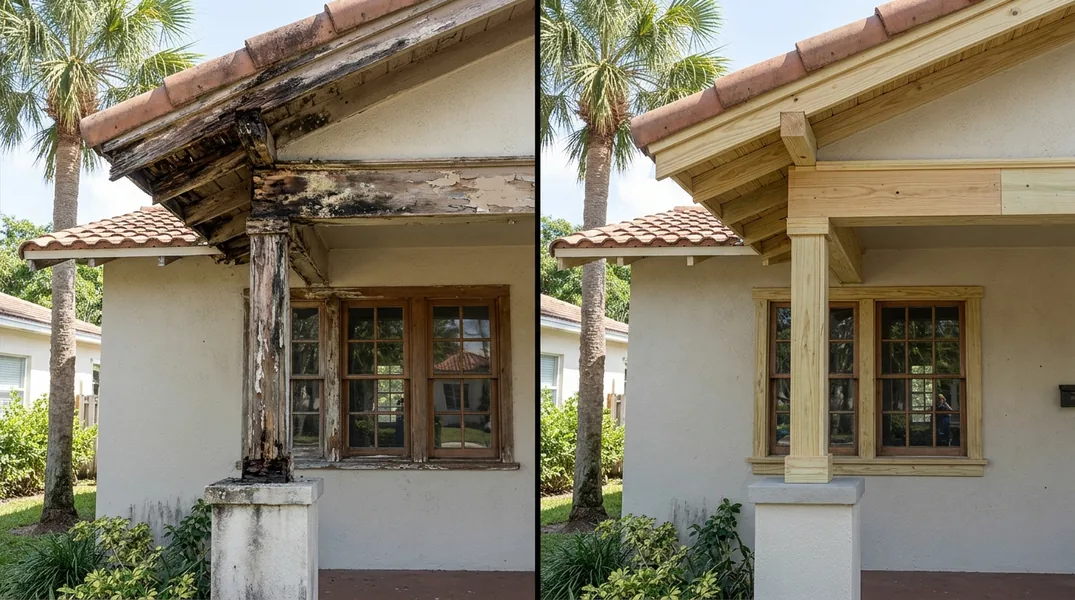
Why Old Fort Lauderdale Cottage Floors Sag and Slope
If you own one of the charming older cottages scattered throughout Fort Lauderdale, you may have noticed your hardwood floors aren't quite as level as they used to be. That subtle slope or soft spot underfoot isn't just annoying, it's a warning sign that something structural needs attention. The tropical climate, high humidity, and decades of seasonal stress create a perfect storm for floor problems in vintage South Florida homes.
The most common culprits behind sagging floors are compromised floor joists, which are the horizontal beams that support your entire floor system. In older cottages, these joists were often made from pine or cypress and sit just inches above the ground or crawl space. Over time, moisture exposure from our humid climate, occasional flooding, or poor drainage can weaken these critical components. When joists lose their structural integrity, the floor above them begins to settle unevenly, creating that telltale sag or slope that gets worse with foot traffic and time.
Wood Rot and Termite Damage: The Hidden Culprits
Wood Rot & Dry Rot Repair is often the root cause of sagging floors in older homes. Dry rot, despite its name, thrives in damp conditions and can silently consume the heart of a wooden joist, leaving the surface looking deceptively solid. In Fort Lauderdale's subtropical environment, where moisture levels remain high year-round, wood-destroying fungi find ideal conditions. A joist that appears fine on the outside may be 50 percent compromised internally, unable to bear its design load.
Termite Damage Repair is equally critical to address. Subterranean termites are endemic to South Florida and have been documented in virtually every neighborhood. These insects tunnel through wood from the inside out, creating hollow galleries that collapse under pressure. Many homeowners don't discover termite damage until floors start to move or bounce, meaning the infestation has had months or years to spread. A professional inspection can reveal the extent of damage and determine whether repair or replacement is needed.
Assessing Soft Floors: What to Look For
Before you can fix a sagging floor, you need to understand what you're dealing with. Start by walking slowly across the affected area and note where the floor feels softest or dips most noticeably. Does it happen in one room or multiple areas? Is the slope gradual or does it drop suddenly in one spot? These details help narrow down which joists are affected. You can also look for visual clues: cracks in drywall or plaster, doors that no longer close properly, or gaps between the wall and floor trim often accompany floor settlement.
If you can access the crawl space or basement, inspect the joists directly. Press firmly on the wood with a screwdriver or awl. Soft, spongy wood that the tool penetrates easily indicates rot. Look for discoloration, fungal growth, or visible termite tunnels. Check for standing water, poor drainage, or missing vapor barriers that might be contributing to moisture problems. Take photos and measurements if possible. This groundwork helps a contractor understand the scope of work needed and provide an accurate free estimate.
Floor Joist Repair Solutions: Sistering and Reinforcement
Floor Joist & Subfloor Repair typically involves one of several proven methods. Sistering floor joists is one of the most common and cost-effective approaches for joists that are partially compromised but still structurally sound at their ends. In this method, a new pressure-treated joist is fastened alongside the damaged one, essentially doubling the support capacity of that section. The new joist is bolted or lag-screwed to the damaged joist at regular intervals, creating a composite beam that can handle the load. This technique works well when the rot or damage is localized to the middle span of the joist.
In cases where rot extends to the bearing points (where the joist connects to the foundation or beam), a full joist replacement becomes necessary. This is more invasive and requires temporary support posts to hold up the floor while the old joist is removed and a new one installed. The new joist is typically pressure-treated lumber rated for ground contact and is securely fastened to the support structure with modern hardware. After the repair, the crawl space or basement should be evaluated for drainage improvements and moisture control to prevent future problems. A professional contractor will ensure all work meets current building codes and includes proper ventilation to keep the area dry.
When You Need Beam Replacement & Load-Bearing Wall Removal Services
In some cases, the problem isn't limited to individual joists but involves the main beam or support structure that the joists rest on. If the central beam has rotted or settled, the entire floor system can begin to fail. This is a more serious structural issue that requires professional assessment and engineering support. Beam Replacement & Load-Bearing Wall Removal work must be performed by experienced carpenters who understand load calculations and can coordinate with structural engineers to ensure safety during and after the repair.
Beam problems are often accompanied by more dramatic floor slopes or sagging that affects large areas of the home. You might notice cracks in foundation walls, doors that bind, or windows that won't open and close smoothly. These are signs that the house is settling unevenly due to inadequate support. Addressing a failing beam is not a DIY project and should not be delayed. The longer the problem persists, the more secondary damage occurs to walls, plumbing, and electrical systems. If you suspect your home has a beam issue, contact Fort Lauderdale Carpentry at (754) 354-7735 for a professional evaluation.
Prevention and Long-Term Maintenance
Once your floors are repaired, protecting them from future damage is essential in South Florida's climate. Proper drainage around the foundation is the first line of defense. Gutters should direct water away from the house, and the ground should slope away from the foundation to prevent pooling. If you have a crawl space, install or upgrade the vapor barrier to reduce moisture infiltration. Ensure crawl space vents are clear and functioning to allow air circulation. In high-humidity areas, a dehumidifier or ventilation system can make a significant difference in keeping wood dry.
Regular inspections are your best insurance policy. Schedule a professional evaluation every two to three years, especially if you've had prior water intrusion or pest issues. Look for new signs of rot, termite activity, or settling. Keep an eye on your floors for new soft spots or slopes. Address plumbing leaks immediately, as even small drips can cause major damage over time. If you're concerned about your home's foundation or floor system, reach out to Fort Lauderdale Carpentry for a professional inspection and free estimate. Our team has years of experience with older Fort Lauderdale properties and can identify problems before they become expensive repairs.
Looking for a professional carpentry contractor in Fort Lauderdale? Fort Lauderdale Carpentry responds fast for all your carpentry needs.
Get a Free QuoteOur services: Wood Rot & Dry Rot Repair · Termite Damage Repair · Floor Joist & Subfloor Repair