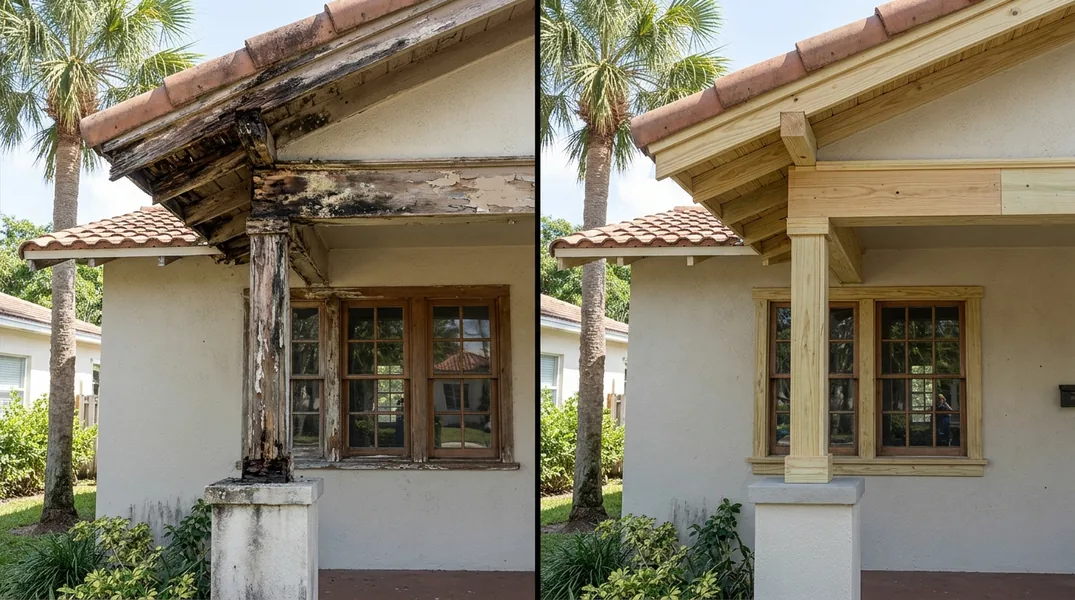
How Salt Air Damages Wood in Coastal Fort Lauderdale
Living near the ocean in Fort Lauderdale comes with undeniable charm, but it also brings a hidden threat to your home's wooden structures. Salt air is one of the most corrosive environmental factors affecting residential carpentry, and it works faster than most homeowners realize. The salt crystals suspended in coastal air don't just settle on your roof or windows; they penetrate exposed wood surfaces, accelerating rot and decay at rates far exceeding inland properties.
The science behind salt air wood damage is straightforward but destructive. Salt attracts and holds moisture, which is the primary catalyst for wood rot. When salt deposits accumulate on fascia boards, deck joists, exterior trim, and railings, they create a perpetual damp environment. This moisture prevents the wood from drying properly, even on sunny days. Over time, this constant dampness breaks down the wood's cellular structure, weakening its integrity and making it vulnerable to fungal growth and structural failure. In Fort Lauderdale, where humidity is already high and ocean breezes are frequent, this process happens remarkably fast.
Vulnerable Areas: Fascia, Decks, and Exterior Trim
Not all wood on your home is equally vulnerable to salt air damage. Certain areas face significantly higher exposure and therefore deteriorate more quickly. Fascia boards, which run along the edges of your roofline, are among the first casualties. These boards face constant wind-driven salt spray and have minimal opportunity to dry between exposures. Similarly, deck boards and railings are perpetually exposed to salt-laden air, especially if your deck faces the ocean or is located in an elevated position where wind is stronger. Exterior trim around windows, doors, and architectural details also suffers accelerated decay because these areas often trap moisture and salt deposits in joints and crevices.
The reason these areas are so vulnerable is their exposure combined with their construction. Fascia boards are typically installed horizontally and face outward, making them direct targets for salt spray. Deck surfaces, especially the underside of boards and the spaces between joists, create perfect environments for moisture retention. Exterior trim, particularly at corners and where pieces meet, develops gaps that collect salt deposits and prevent proper drainage. If you've noticed soft spots, discoloration, or peeling paint on these areas, you may already have salt air wood damage that requires professional attention. Wood Rot & Dry Rot Repair in these high-exposure zones should not be delayed, as damage compounds quickly.
Warning Signs of Salt Air Wood Damage: What to Look For
Early detection is crucial when dealing with salt air wood damage. Homeowners who know what to look for can catch problems before they become structural emergencies. The first visible sign is often paint failure. If the paint on your fascia, trim, or deck railings is peeling, blistering, or chalking prematurely, salt air may be breaking down the wood beneath. Another common indicator is discoloration or darkening of wood surfaces, which typically signals moisture penetration and early fungal growth. You might also notice a soft or spongy texture when you press on the wood with a screwdriver or awl; this indicates the wood fibers are breaking down.
More advanced signs include visible rot, which appears as darkened, crumbling wood that may feel mushy or hollow. If you can easily push a screwdriver or knife into the wood, structural damage is already significant. Gaps appearing between trim pieces, warping of fascia boards, or loose railings are also red flags. Some homeowners notice a musty odor near affected areas, which indicates active fungal decay. In Hollywood and surrounding coastal areas, these warning signs appear more frequently than in inland communities. If you spot any of these issues, contact Fort Lauderdale Carpentry at (754) 354-7735 for a professional assessment and free estimate.
Prevention Strategies for Coastal Homeowners
The best approach to salt air wood damage is prevention, which requires a multi-layered strategy. The first line of defense is regular maintenance and cleaning. Rinse exposed wood surfaces with fresh water every few months to remove salt deposits before they can cause damage. This is especially important after storms or heavy wind events that drive salt spray inland. When cleaning, pay special attention to joints, corners, and the undersides of horizontal surfaces where salt accumulates. A gentle rinse with a garden hose is often sufficient; avoid high-pressure washing, which can drive moisture deeper into the wood.
The second critical strategy is protective coatings. High-quality exterior paint and sealers designed for coastal environments create a barrier against salt air penetration. Choose marine-grade or salt-resistant products specifically formulated for your climate. These coatings should be reapplied every two to three years in high-exposure areas, as coastal conditions degrade paint faster than inland environments. For wood that cannot be painted, such as cedar shakes or decorative trim, use clear sealers rated for salt air resistance. Additionally, ensure proper drainage around all wooden structures. Standing water and pooled moisture accelerate decay, so keep gutters clean, ensure downspouts direct water away from the home, and maintain proper grading around deck footings and foundation areas.
Professional Wood Rot & Dry Rot Repair Near Me: When to Call a Pro
While preventive maintenance is essential, there comes a point when professional intervention is necessary. If you've discovered rot that extends more than a quarter-inch deep, spans more than a few square inches, or affects structural elements like deck joists or load-bearing trim, DIY repairs are insufficient. Wood Rot & Dry Rot Repair professionals have the expertise to assess the full extent of damage, which often extends beyond what's visible on the surface. Rot frequently spreads into hidden areas like the space behind fascia boards or the interior of deck joists, where it weakens structural integrity without obvious external signs.
Fort Lauderdale Carpentry specializes in identifying and repairing salt air wood damage throughout coastal communities. Our team uses proven techniques to remove compromised wood, treat affected areas to prevent future decay, and install replacement materials rated for salt air resistance. We understand the specific challenges coastal homeowners face and recommend solutions tailored to your home's exposure level and your budget. Whether you need fascia replacement, deck board restoration, or exterior trim repair, professional assessment ensures the work is done correctly the first time. Don't wait until damage becomes a safety hazard. Reach out to Fort Lauderdale Carpentry at (754) 354-7735 or request a free estimate today.
Wood Rot & Dry Rot Repair Cost in Fort Lauderdale: What to Budget
Understanding the cost of wood rot repair helps homeowners make informed decisions about maintenance and repair timing. The price of addressing salt air wood damage depends on several factors: the extent of decay, the type of wood being replaced, the location and accessibility of the damaged area, and whether structural elements are involved. Minor repairs affecting only surface trim might cost between five hundred and fifteen hundred dollars, while more extensive fascia or deck restoration can range from two thousand to five thousand dollars or more. Structural repairs involving Floor Joist & Subfloor Repair or significant deck reconstruction naturally cost more due to the complexity and importance of the work.
The key to managing costs is addressing problems early. A small area of rot caught and repaired promptly costs far less than waiting until damage spreads to structural framing or multiple areas of your home. Additionally, investing in quality materials and protective coatings during repair extends the life of your investment and reduces the likelihood of repeat damage. Fort Lauderdale Carpentry provides transparent pricing based on the specific scope of your project. We recommend getting multiple estimates and understanding exactly what's included in each quote. Our team will explain why certain repairs are necessary and discuss options that fit your budget without compromising safety or durability. Contact us at (754) 354-7735 to discuss your specific situation and receive a detailed estimate.
Looking for a professional carpentry contractor in Fort Lauderdale? Fort Lauderdale Carpentry responds fast for all your carpentry needs.
Get a Free QuoteOur services: Wood Rot & Dry Rot Repair · Termite Damage Repair · Floor Joist & Subfloor Repair