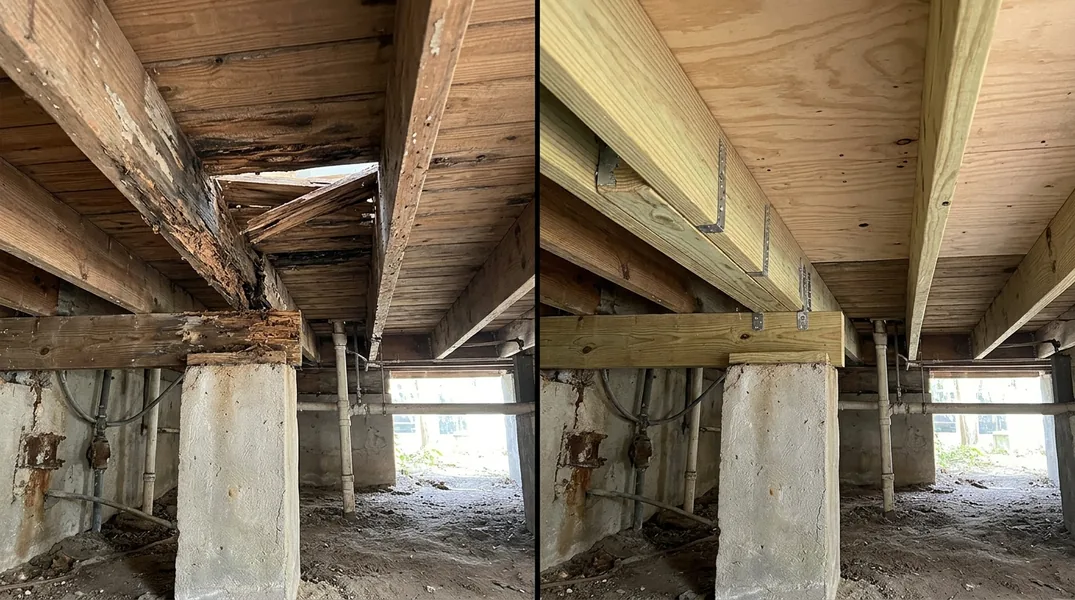
Drywood vs Subterranean Termites: What's the Difference?
If you own a home in Fort Lauderdale, termites are more than just a nuisance, they're a serious structural threat. The warm, humid climate of South Florida creates the perfect breeding ground for multiple termite species, and understanding which type has invaded your home is the first step toward effective treatment and repair. The two most common culprits homeowners face are drywood termites and subterranean termites, and they behave very differently.
Drywood termites live entirely within the wood they consume and never need contact with soil. Subterranean termites, by contrast, build colonies in the ground and travel through mud tubes to reach wood structures above. This fundamental difference in behavior means they cause different damage patterns, leave different signs, and require different treatment approaches. Knowing which species you're dealing with can save you thousands of dollars in unnecessary repairs and help you avoid further infestation.
Identifying Drywood Termites and Their Damage Patterns
Drywood termites are solitary wood-dwellers that don't require moisture or ground contact to survive. In Fort Lauderdale, they're found in attics, roof framing, wooden furniture, and structural beams. One of the most telling signs of a drywood termite infestation is the presence of termite frass, which is their fecal pellets. Unlike subterranean termites, drywood termites push their frass out of small exit holes in the wood, creating tiny piles of sawdust-like material on windowsills, floors, or beneath infested wood. These pellets are roughly the size of a grain of sand and often appear in clusters.
The damage caused by drywood termites tends to follow the grain of the wood, creating galleries (tunnels) that are smooth and clean. You might notice wood that sounds hollow when tapped, or areas where the surface appears intact but the interior is completely hollowed out. Drywood termite damage often doesn't become obvious until the infestation is well established, which is why regular inspections are critical. If you suspect drywood termites in your home, contact Fort Lauderdale Carpentry for a free estimate to assess the extent of the damage.
Subterranean Termites and Formosan Termites in Florida
Subterranean termites are far more common in Florida than drywood termites, and they cause the majority of termite damage to homes in our region. These termites live in underground colonies and must maintain contact with soil to survive. They build distinctive mud tubes (also called shelter tubes) that run from the ground up the exterior of your home, allowing them to travel safely to wood sources while staying protected from dry air. If you see these brown, pencil-thin tubes on your foundation, crawl space, or basement walls, you have a subterranean termite problem.
One particularly aggressive species you may encounter in Florida is the Formosan termite. These are a subset of subterranean termites that are larger and more destructive than native subterranean species. Formosan termites Florida populations have grown significantly over the past two decades, and they're known for their ability to consume wood at an alarming rate. A large Formosan colony can damage a home's structural integrity in just a few years. The damage pattern from subterranean and Formosan termites includes galleries that run against the grain, often leaving a thin veneer of wood on the surface while hollowing out the interior. Unlike drywood termites, subterranean termites don't leave frass piles; instead, they seal their galleries with mud.
Wood Rot vs Termite Damage: How to Tell the Difference
Homeowners often confuse wood rot vs termite damage because both result in weakened, crumbling wood. However, they have distinct characteristics that can help you identify the culprit. Wood Rot & Dry Rot Repair addresses damage caused by fungal decay, which thrives in moisture-rich environments. Rotted wood typically feels soft and spongy, and the decay spreads across the grain in irregular patterns. Rot often appears discolored, darkened, or bleached, depending on the fungal species involved.
Termite damage, by contrast, creates clean, well-defined galleries that follow the wood grain. The wood may feel brittle rather than soft, and the damage is often more uniform and organized. Drywood termite galleries are especially distinctive because they're smooth and precise, almost as if carved by a machine. If you tap on wood damaged by termites, it sounds hollow, whereas rotted wood may simply feel mushy. The presence of mud tubes, frass, or live insects is a clear indicator of termites rather than rot. If you're uncertain whether your home has termite damage or wood rot, Termite Damage Repair professionals can provide a thorough inspection and diagnosis.
What to Do If You Find Termite Frass or Other Signs of Infestation
Discovering termite frass or mud tubes on your property requires prompt action. The longer you wait, the more damage termites will cause to your home's structural integrity. Start by documenting what you've found with photos, and note the location and date of discovery. Avoid disturbing the area, as this can spread frass or alert the colony. Do not attempt to treat the infestation yourself with store-bought pesticides, as this often drives termites deeper into the wood and makes professional treatment more difficult.
Your next step should be to contact a licensed pest control professional to confirm the species and extent of the infestation. Once the termites are treated and eliminated, you'll need to assess and repair any structural damage. This is where Fort Lauderdale Carpentry comes in. Depending on the severity, you may need Floor Joist & Subfloor Repair, Beam Replacement & Load-Bearing Wall Removal, or Termite Damage Repair services. Call us at (754) 354-7735 to schedule an inspection and receive a detailed repair estimate.
Termite Damage Repair Near Me: When to Call Fort Lauderdale Carpentry
After termites are eradicated, the real work begins. Structural repairs following termite damage are not a DIY project, even if you're handy. Compromised beams, joists, and framing can lead to sagging floors, cracked walls, and even catastrophic structural failure if not properly repaired. Professional carpenters have the expertise to assess hidden damage, determine load-bearing requirements, and replace or reinforce damaged wood to code.
Fort Lauderdale Carpentry specializes in comprehensive termite and wood damage repairs. Our team inspects every affected area, removes damaged wood, and installs new structural components that meet or exceed building codes. We work with precision and attention to detail, ensuring your home is safe and structurally sound. Whether you need minor repairs or major reconstruction, we're here to help. Contact us today at (754) 354-7735 or visit our website to request a free estimate. Don't wait until termite damage threatens your home's safety.
Looking for a professional carpentry contractor in Fort Lauderdale? Fort Lauderdale Carpentry responds fast for all your carpentry needs.
Get a Free QuoteOur services: Wood Rot & Dry Rot Repair · Termite Damage Repair · Floor Joist & Subfloor Repair