Do You Need a Permit for Carpentry Work in Fort Lauderdale?
If you're planning a carpentry project in Fort Lauderdale, one of the first questions you should ask is whether you need a building permit. The short answer is: it depends on the scope and nature of your work. The City of Fort Lauderdale and Broward County both have specific rules about what requires permitting, and ignoring these requirements can lead to fines, failed inspections, and problems when you sell your home.
Most structural work, renovations involving framing changes, and anything that affects the integrity of your home requires a Fort Lauderdale building permit. This includes wall removal, beam installation, floor repairs, and significant carpentry modifications. However, minor repairs and cosmetic work often fall outside permitting requirements. Understanding the distinction is critical before you start any project, and working with an experienced contractor who knows local codes can save you time, money, and headaches.
Fort Lauderdale Building Permit Requirements: What Triggers a Permit
The City of Fort Lauderdale requires building permits for work that involves structural changes, electrical systems, plumbing, HVAC modifications, and any carpentry that affects the load-bearing capacity of your home. If you're removing walls, installing beams, replacing joists, or performing Wood Rot & Dry Rot Repair that involves structural components, you'll almost certainly need a permit. The same applies to Floor Joist & Subfloor Repair and Termite Damage Repair that compromises the structural integrity of your home.
Minor repairs that don't alter the structure or safety of your home typically do not require permits. Examples include replacing trim, patching small areas of drywall, or refinishing existing surfaces. However, when in doubt, it's always better to err on the side of caution and consult with the City of Fort Lauderdale Building Department or a licensed contractor. Proceeding without a required permit can result in stop-work orders, fines up to several thousand dollars, and the requirement to undo work that's already been completed.
Load-Bearing Wall Removal in Fort Lauderdale: Do I Need a Permit?
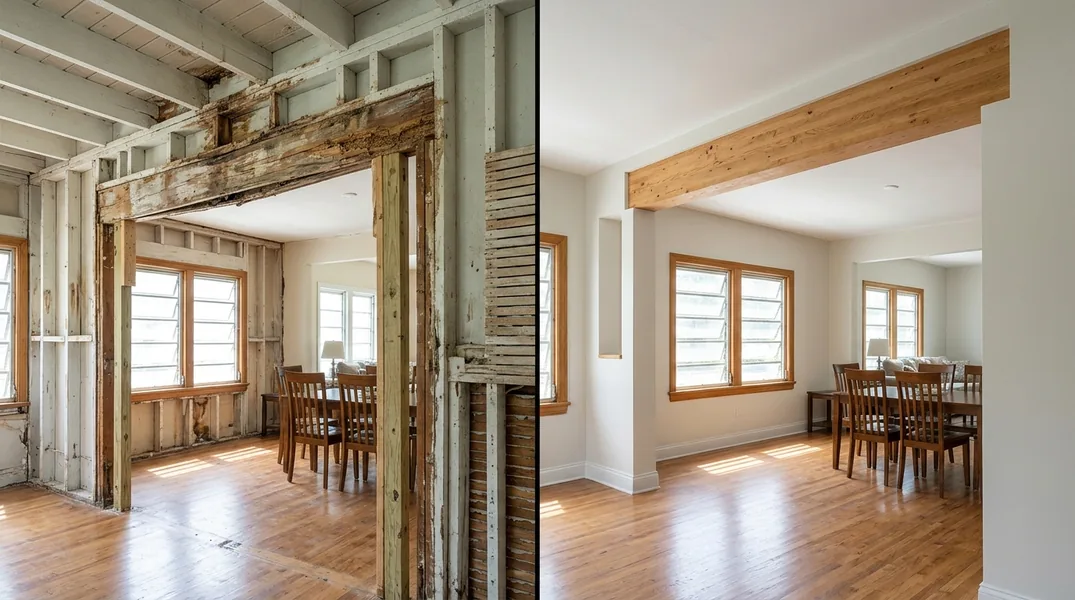
Removing or modifying a load-bearing wall is one of the most common questions homeowners ask about permitting. The answer is unambiguous: yes, you absolutely need a Fort Lauderdale building permit to remove a load-bearing wall. In fact, Beam Replacement & Load-Bearing Wall Removal is one of the most heavily regulated carpentry projects because improper execution can cause catastrophic structural failure, endangering lives and property.
When you remove a load-bearing wall, you must install a properly sized beam to carry the weight that was previously supported by that wall. This beam must be engineered and sized based on the span, the load above it, and local building codes. The City of Fort Lauderdale requires a structural engineer's calculations and a permit before any work begins. After the work is complete, a building inspector must verify that the installation meets code. Attempting this work without a permit not only violates local ordinances but puts your family at risk and can make your home unsellable or uninsurable.
Broward County Permit Requirements: Understanding County vs. City Rules
While the City of Fort Lauderdale has its own building department, some areas of Fort Lauderdale and surrounding communities fall under Broward County jurisdiction. Understanding which authority has jurisdiction over your property is the first step in the permitting process. Generally, incorporated cities like Fort Lauderdale issue their own permits, while unincorporated areas of Broward County fall under county permitting authority.
Broward County building permit rules are similar to city requirements but may have slight differences in processing times, fees, and inspection procedures. Both jurisdictions follow the Florida Building Code, which means the technical standards for carpentry, structural work, and repairs are essentially the same. However, the permitting process itself, application requirements, and inspection scheduling may differ. If your property is in an unincorporated area, you'll work directly with Broward County. If you're unsure which jurisdiction applies to your address, contact the appropriate building department or speak with a licensed contractor who works in your area regularly.
The Permitting Process: Steps to Get Your Carpentry Permit Approved
Getting a Fort Lauderdale building permit typically involves several steps. First, you'll need detailed plans or drawings of the work to be performed. For simple projects, a sketch may suffice, but for structural work like Beam Replacement & Load-Bearing Wall Removal, you'll need engineered drawings and calculations. Next, you'll submit your application to the building department along with the required fees. The department will review your application for compliance with building codes, zoning regulations, and safety standards.
After submission, expect a review period of one to three weeks, depending on the complexity of the project and current department workload. Once approved, you'll receive your permit and can begin work. During construction, the building department will schedule inspections at key stages (foundation, framing, before closing walls, final inspection). You must pass all inspections before your project is considered complete. If you hire a licensed contractor like Fort Lauderdale Carpentry, they'll handle much of this process for you, ensuring all requirements are met and inspections are scheduled appropriately. To discuss your specific project and get started, call us at (754) 354-7735 or request a free estimate.
What Happens If You Skip the Permit Process
Skipping the permit process might seem like a way to save time and money, but the consequences can be severe and costly. If the City of Fort Lauderdale or Broward County discovers unpermitted work, they can issue a stop-work order, forcing you to halt construction immediately. You'll then be required to obtain a retroactive permit, which often involves additional fees, inspections, and possibly the removal and redo of work that doesn't meet code. Fines for unpermitted work can range from hundreds to thousands of dollars, depending on the nature and extent of the violation.
Beyond fines, unpermitted work creates serious problems when you sell your home. Buyers and their lenders often require proof that all structural work was permitted and inspected. If inspections reveal unpermitted work, you may be forced to disclose it, which can kill a sale or significantly reduce your home's value. Additionally, unpermitted work may not be covered by your homeowner's insurance, leaving you liable for damages or injuries. For structural repairs like Wood Rot & Dry Rot Repair or Floor Joist & Subfloor Repair that affect your home's safety, permitting isn't just a legal requirement, it's a protection for you and your family. Always work with a insured contractor who understands local codes and will ensure your project is done right.
Looking for a professional carpentry contractor in Fort Lauderdale? Fort Lauderdale Carpentry responds fast for all your carpentry needs.
Get a Free QuoteOur services: Wood Rot & Dry Rot Repair · Termite Damage Repair · Floor Joist & Subfloor Repair